

Table of Contents
ToggleYou’re Burned Out… But It Keeps Coming Back
Burnout or ADHD? Many high-performing adults struggle to determine whether their chronic exhaustion, difficulty focusing, and declining productivity are caused by burnout, ADHD, or both.
You tell yourself it’s just burnout.
Work has been intense. Life has been demanding. You’ve been pushing hard.
So it makes sense that you feel:
- Exhausted
- Overwhelmed
- Mentally drained
- Behind, no matter how much you do
You rest. You reset. You try to get back on track.
But then it happens again.
=> The same cycle:
Effort → exhaustion → recovery → repeat
At some point, a different question starts to emerge:
“What if this isn’t just burnout?”
What Burnout Actually Is
Burnout is a response to chronic stress, especially in work or high-demand environments.
It typically includes:
- Emotional exhaustion
- Reduced motivation
- Feeling detached or depleted
- Difficulty concentrating
Burnout is real—and common among high performers.
But here’s the key:
=> Burnout is usually tied to external demands
- Workload
- Environment
- Stress levels
When those improve, burnout should improve too.
When It’s Not Just Burnout
If you’ve addressed stress—but still feel stuck—something else may be going on.
Many high-achieving adults experience what looks like burnout…
=> But is actually undiagnosed ADHD
What ADHD Looks Like in High Performers
ADHD doesn’t always look like distraction.
In high-functioning adults, it often looks like:
- Inconsistent focus
- Chronic procrastination
- Mental overload
- Difficulty starting tasks
- Relying on urgency to function
=> You’re capable—but not consistently in control of your execution
If this sounds familiar, start here:
→ Adult ADHD in California: Diagnosis, Treatment, and What to Expect
The Key Difference
Burnout is about too much demand
ADHD is about difficulty regulating attention and effort
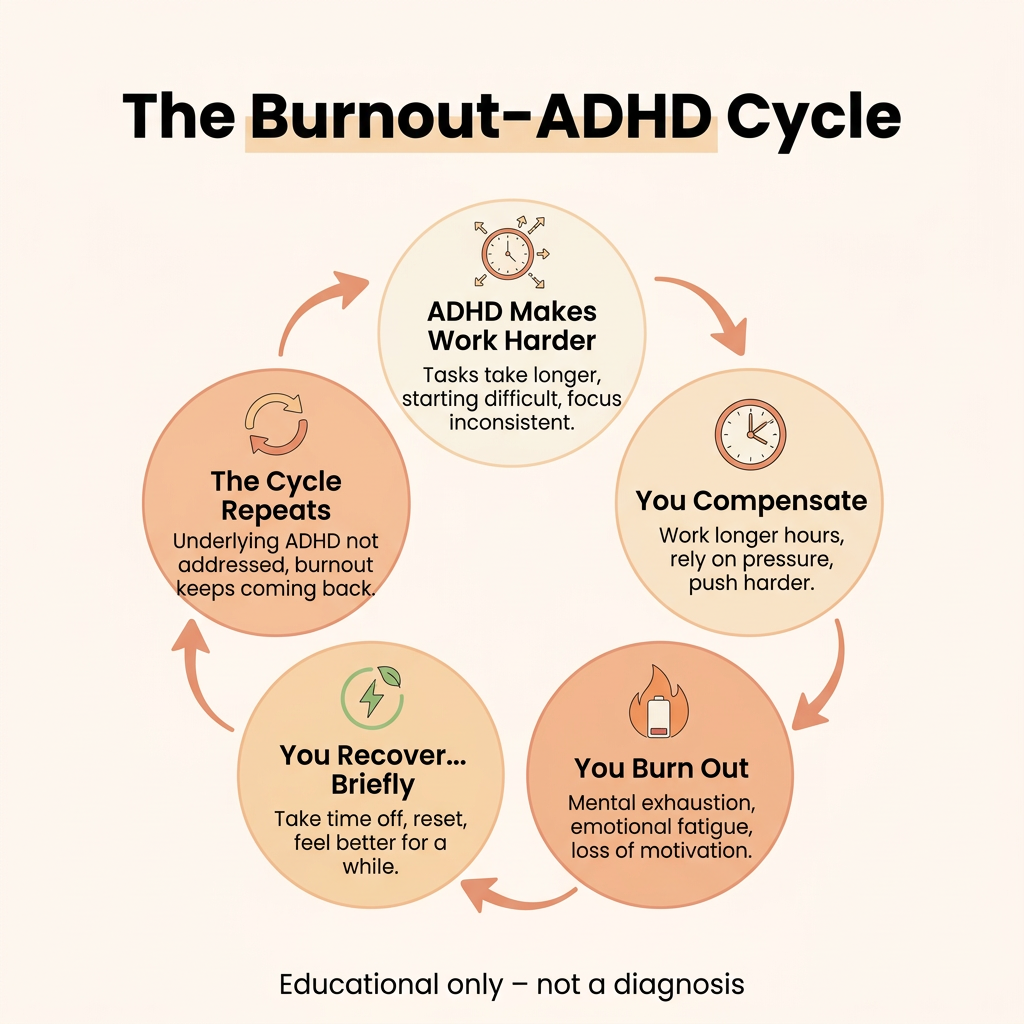
The Burnout–ADHD Cycle
This is where many people get stuck.
Step 1: ADHD Makes Work Harder
- Tasks take longer
- Starting is difficult
- Focus is inconsistent
Step 2: You Compensate
- You work longer hours
- You rely on pressure
- You push harder than others
Step 3: You Burn Out
- Mental exhaustion
- Emotional fatigue
- Loss of motivation
Step 4: You Recover… Briefly
You take time off, reset, and feel better—for a while.
Step 5: The Cycle Repeats
Because the underlying issue—ADHD—hasn’t been addressed.
=> This is why burnout keeps coming back.
Why High Achievers Miss ADHD
If you’re successful, ADHD is often the last thing you consider.
Especially if you:
- Did well in school
- Built a career
- Manage significant responsibilities
=> But ADHD in high achievers often looks like overcompensation, not failure.
Common Patterns
- You rely on last-minute pressure to perform
- You feel constantly behind—even when succeeding
- You overwork to stay on track
- You experience repeated cycles of burnout
=> This pattern is especially common in:
→ ADHD in High-Achieving Women
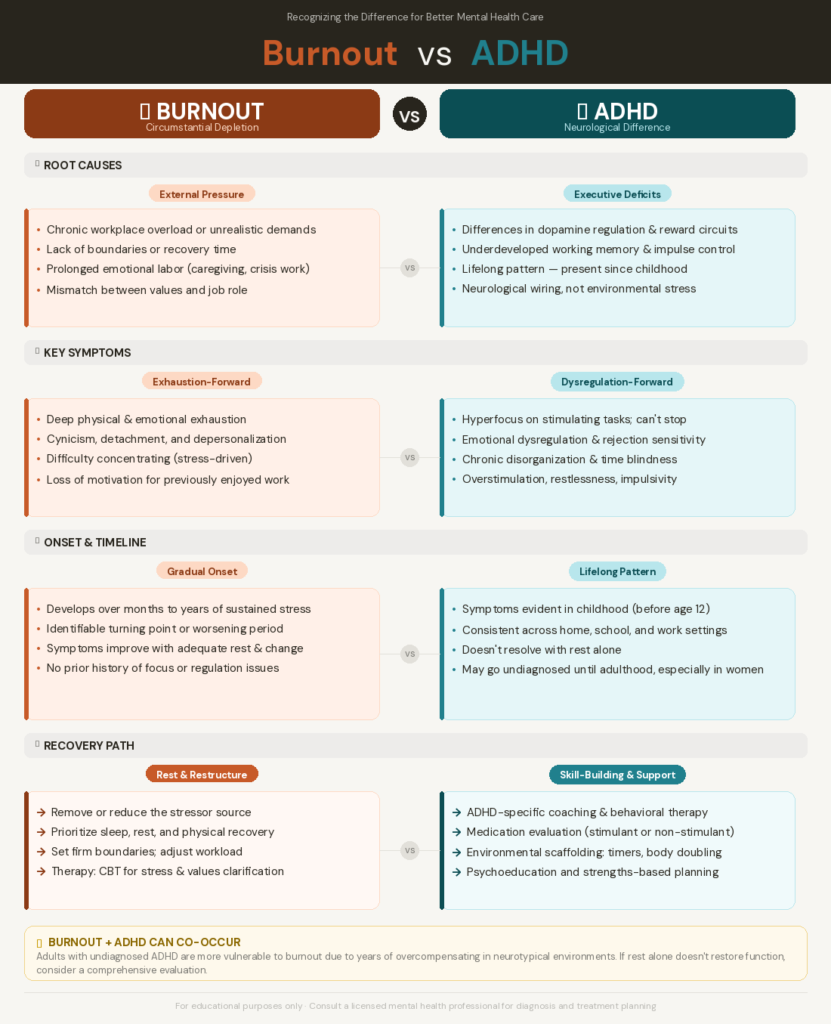
Burnout or ADHD? Key Differences to Understand
Here’s a simple way to distinguish them:
Burnout
- Caused by external stress
- Improves when workload decreases
- Primarily emotional exhaustion
- Temporary (when addressed)
ADHD
- Lifelong pattern
- Present across multiple areas of life
- Involves difficulty starting, organizing, and following through
- Persists even when stress is reduced
The Most Important Question
Does this only happen when you’re overwhelmed…
or has this been a pattern for years?
If it’s long-standing:
=>ADHD becomes more likely
ADHD vs Anxiety vs Burnout
These three are often intertwined.
- ADHD → difficulty with execution
- Anxiety → worry and overthinking
- Burnout → exhaustion from chronic effort
=> Many people are treated for anxiety or burnout first
But if ADHD is underneath:
- Anxiety keeps returning
- Burnout keeps repeating
=> To understand this more clearly:
→ ADHD vs Anxiety: How to Tell the Difference
The Cost of Misidentifying the Problem
If ADHD is mistaken for burnout:
- You keep trying to “rest your way out of it”
- You blame yourself for not improving
- You continue cycles of overwork and exhaustion
=> Without addressing the root cause, nothing fully resolves
When to Consider ADHD
You may want to look into ADHD if:
- Burnout keeps coming back
- You rely on urgency to function
- You struggle to start tasks—even when rested
- You feel capable—but inconsistent
- You’ve been questioning ADHD for a while
What Getting the Right Diagnosis Changes
When ADHD is correctly identified:
- The pattern finally makes sense
- You stop blaming yourself
- You stop relying on unsustainable strategies
- You gain tools that actually work
=> It’s not about doing more
=> It’s about working differently
Ready for Clarity?
If this feels familiar, it’s worth looking deeper.
A structured ADHD evaluation can help you:
- Understand what’s actually going on
- Differentiate burnout from ADHD
- Build a plan that works for your brain
What to Read Next
- Not sure if it’s ADHD or anxiety? → ADHD vs Anxiety: How to Tell the Difference
- High-achieving but still struggling? → ADHD in High-Achieving Women
- Want a full overview? → Adult ADHD in California: Diagnosis, Treatment, and What to Expect
References & Resources
The following evidence-based resources provide additional information about ADHD symptoms, diagnosis, and treatment.
- CDC ADHD Information: https://www.cdc.gov/adhd/
- CHADD Adult ADHD Resources: https://chadd.org/about-adhd/
- American Psychiatric Association ADHD Information: https://www.psychiatry.org/patients-families/adhd/what-is-adhd