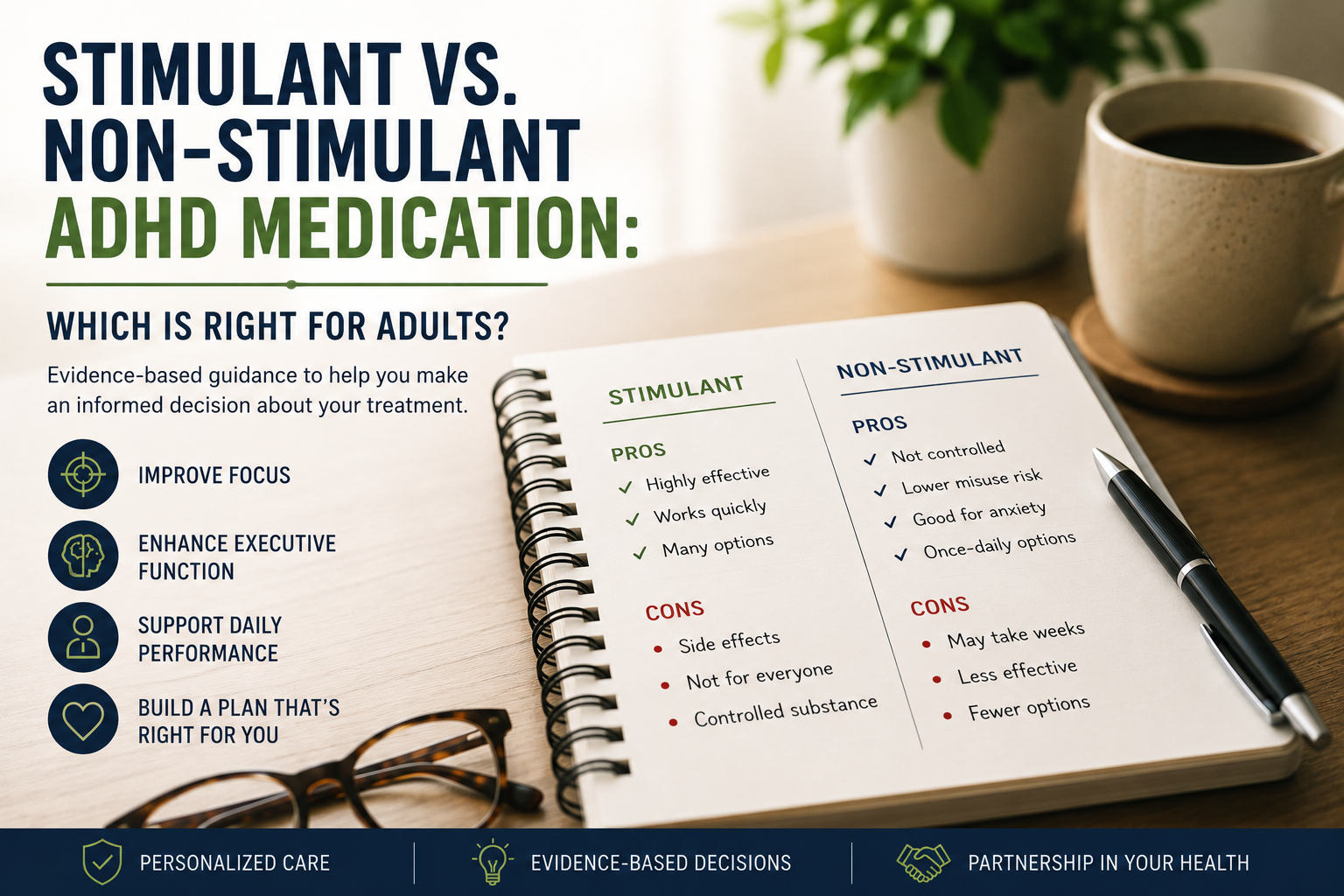

If you’ve recently been diagnosed with ADHD, one of the first questions you’ll likely ask is:
“Should I take a stimulant or a non-stimulant medication?”
It’s an understandable question—and an important one.
For many adults, the decision feels overwhelming. You’ve probably heard conflicting opinions from friends, social media, or news articles. Some people describe stimulant medications as life-changing, while others worry they’re addictive or unsafe. Non-stimulant medications are often described as “gentler,” but you may also wonder whether they’re as effective.
The reality is that there isn’t a single “best” ADHD medication.
The right treatment depends on your symptoms, medical history, other mental health conditions, lifestyle, and personal preferences. What works exceptionally well for one person may produce little benefit—or unwanted side effects—for someone else.
Fortunately, healthcare professionals experienced in treating adult ADHD don’t make these decisions by guesswork. Decades of clinical research have helped establish clear treatment guidelines, while also showing that ADHD medication should always be tailored to the individual rather than applied with a one-size-fits-all approach.
In general, stimulant medications remain the first-line treatment for adults with ADHD because they work quickly and consistently improve symptoms for most patients. However, non-stimulant medications are valuable options for people who cannot take stimulants, experience significant side effects, have certain medical conditions, or simply prefer to avoid controlled substances.
In this guide, we’ll explain how stimulant and non-stimulant ADHD medications differ, what current research tells us about their effectiveness and safety, and how experienced ADHD clinicians decide which medication is most appropriate for each patient. By the end, you’ll have a clearer understanding of why the “best” medication isn’t necessarily the newest or strongest one—it’s the medication that’s the best fit for you.
Table of Contents
ToggleUnderstanding Why ADHD Medication Works
Before comparing stimulant and non-stimulant medications, it helps to understand what they’re actually treating.
Many people assume ADHD is simply a problem with paying attention. In reality, ADHD is a neurodevelopmental disorder that affects the brain’s ability to regulate attention, motivation, impulse control, emotional regulation, and executive functioning.
Executive functions are the mental skills that help us plan, prioritize, stay organized, manage time, resist distractions, and follow through on tasks. When these brain networks aren’t working efficiently, everyday responsibilities can feel much harder than they should—even for highly intelligent, motivated adults.
That’s why many adults with ADHD describe a frustrating experience: they know exactly what needs to be done but struggle to get started, stay focused, or finish what they begin. It’s not a lack of willpower. It’s a difference in how the brain regulates attention and motivation.
Researchers believe much of this difference involves two important brain chemicals called dopamine and norepinephrine.
These neurotransmitters help brain cells communicate with one another, particularly in the prefrontal cortex—the area responsible for planning, decision-making, working memory, and self-control. In adults with ADHD, these communication networks don’t function as efficiently, making it more difficult to filter distractions, organize information, regulate impulses, and sustain attention.
ADHD medications don’t “create” focus or increase intelligence. Instead, they improve communication within these brain networks, allowing many people to use the executive skills they already have more consistently.
For some patients, the difference can be remarkable.
Tasks that once felt impossible become manageable. Starting a project no longer requires hours of mental preparation. Conversations become easier to follow. Time management improves. Instead of feeling like their thoughts are racing in every direction, many patients describe their minds as feeling calmer and more organized.
Of course, medication isn’t a cure for ADHD. It doesn’t teach organizational skills, eliminate procrastination, or replace healthy habits. But by improving the brain’s ability to regulate attention and executive functioning, medication often creates the mental space needed to build those skills successfully.
This understanding also explains why stimulant and non-stimulant medications aren’t interchangeable. Although both aim to improve ADHD symptoms, they influence these brain pathways in different ways—and that affects how quickly they work, how effective they are, and which patients are most likely to benefit.
Why Stimulants Are Usually the First Choice
If stimulant medications receive so much negative attention in the media, you might wonder why they remain the first treatment many experienced ADHD clinicians recommend for adults with ADHD.
The answer is simple: they work exceptionally well for most people.
For more than 50 years, stimulant medications have been the most extensively studied treatment for ADHD. During that time, hundreds of clinical trials have consistently demonstrated that stimulants produce larger improvements in attention, executive functioning, and overall symptom control than any other medication currently available (Posner et al., 2020; Ostinelli et al., 2025).
In fact, research suggests that approximately 70% of adults experience meaningful improvement after starting a stimulant medication (Posner et al., 2020). Many patients notice that they’re better able to stay focused during conversations, complete tasks they would normally procrastinate on, and organize their day with less mental effort.
Perhaps just as important, stimulants work quickly.
Unlike many psychiatric medications that require several weeks before benefits become noticeable, stimulant medications often begin working within 30 to 60 minutes after taking a dose (Volkow & Swanson, 2013). This rapid onset allows both patients and clinicians to evaluate effectiveness much sooner, making it easier to adjust the dose or change medications if necessary.
That doesn’t mean finding the right medication is always immediate. Although stimulants are highly effective, each person’s brain responds a little differently. The first medication prescribed isn’t always the one a patient stays on long-term. Some people respond better to one type of stimulant than another, while others need adjustments to the dose or formulation before finding their optimal treatment.
Rather than viewing this as a setback, psychiatrists expect it as part of the treatment process. ADHD medication is rarely about finding a medication that simply “works.” It’s about finding the medication that provides the greatest improvement with the fewest side effects.
The Two Types of Stimulants
Although there are many brand names available, nearly every stimulant medication prescribed for ADHD belongs to one of two families:
- Methylphenidate-based medications, such as Ritalin®, Concerta®, Focalin®, and Jornay PM®
- Amphetamine-based medications, such as Adderall®, Vyvanse®, Mydayis®, and Dexedrine®
Patients are often surprised to learn that experienced ADHD clinicians don’t necessarily choose one family because it’s “stronger” or “better.”
Instead, these medications work through similar—but not identical—mechanisms that increase dopamine and norepinephrine activity in the brain. Because of these differences, it’s common for someone who experiences minimal benefit or bothersome side effects with one stimulant family to do quite well with the other.
This is one of the reasons psychiatrists usually recommend trying both stimulant classes before concluding that stimulant treatment has failed (Olagunju & Ghoddusi, 2024; Posner et al., 2020).
Are Amphetamines Better Than Methylphenidate?
This is a question researchers have tried to answer for years.
The current evidence suggests that both medication families are excellent first-line treatments, but there are some subtle differences.
A large network meta-analysis published in The Lancet Psychiatry compared multiple ADHD medications across numerous randomized clinical trials and found that amphetamine-based medications demonstrated slightly greater effectiveness and acceptability in adults than methylphenidate (Cortese et al., 2018). More recent evidence continues to support stimulants as the most effective medication class for adults with ADHD, while emphasizing that individual response remains far more important than average study results (Ostinelli et al., 2025).
In practical terms, this means clinicians should not automatically prescribe amphetamines to every adult with ADHD.
Instead, current treatment guidelines recommend choosing either methylphenidate or an amphetamine-based medication as an appropriate starting point and then adjusting treatment based on the individual’s response, side effects, medical history, and personal preferences (Olagunju & Ghoddusi, 2024).
In other words, the “best” stimulant isn’t determined by a research paper—it’s determined by how your brain responds.
How Non-Stimulant Medications Are Different
Although stimulant medications remain the first-line treatment for most adults with ADHD, they aren’t the right choice for everyone.
For some people, a non-stimulant medication isn’t simply an alternative—it may be the best treatment based on their medical history, lifestyle, or treatment goals.
This often surprises patients. There’s a common misconception that non-stimulants are “weaker” ADHD medications or that they’re only prescribed after every stimulant has failed. In reality, non-stimulants are evidence-based treatments with an important role in adult ADHD care. The decision to prescribe one is based on the individual patient—not because they’re considered inferior medications (Posner et al., 2020; Brancati et al., 2024).
How Non-Stimulants Work
Stimulants work by rapidly increasing the availability of dopamine and norepinephrine in the brain, which is why many people notice improvement within the first hour after taking a dose.
Non-stimulants work differently.
Rather than producing an immediate increase in these neurotransmitters, non-stimulants gradually change the way brain networks involved in attention, executive functioning, and impulse control communicate with one another. As these changes develop over time, many patients begin to notice improvements in focus, organization, emotional regulation, and the ability to complete tasks.
Because of this gradual mechanism, non-stimulant medications typically take one to four weeks before meaningful improvement becomes noticeable, with some patients continuing to improve over several additional weeks after reaching their target dose (Posner et al., 2020; Radonjić et al., 2023).
This slower timeline doesn’t mean the medication isn’t working. It simply reflects a different mechanism of action. Setting realistic expectations is an important part of treatment, as patients who expect immediate results may stop a medication before it has had enough time to become effective.
Common Non-Stimulant Medications
Several non-stimulant medications are used to treat adult ADHD, and each works somewhat differently.
Atomoxetine (Strattera®) is the most extensively studied non-stimulant for adults with ADHD. It selectively increases norepinephrine signaling and has consistently demonstrated meaningful improvement in ADHD symptoms, although its average effectiveness is somewhat lower than that of stimulant medications (Radonjić et al., 2023).
Guanfacine extended-release (Intuniv®) works by stimulating receptors in the prefrontal cortex that are involved in attention, working memory, and impulse control. While it has been used for many years in children and adolescents, adult research is still relatively limited. Early studies suggest it may benefit some adults with ADHD, but additional research is needed to better define its role (Brancati et al., 2024).
Viloxazine extended-release (Qelbree®) is one of the newest FDA-approved medications for adult ADHD. Although early clinical trials have shown encouraging results, the amount of evidence in adults remains smaller than that available for stimulants or atomoxetine (Brancati et al., 2024).
Another medication you may hear about is bupropion (Wellbutrin®). Although it is not FDA-approved specifically for ADHD, it is sometimes prescribed off-label, particularly for adults who also have depression. Because it can address both conditions simultaneously, it may be an appropriate option for carefully selected patients (Brancati et al., 2024).
Are Non-Stimulants as Effective as Stimulants?
One of the most common questions patients ask is whether non-stimulants work as well as stimulants.
Based on current research, the answer is not usually—but that doesn’t tell the whole story.
Across multiple randomized clinical trials and large systematic reviews, stimulant medications consistently produce larger improvements in ADHD symptoms than currently available non-stimulant medications (Posner et al., 2020; Ostinelli et al., 2025).
However, research studies describe what happens across large groups of people—they don’t predict how an individual patient will respond.
Some adults experience excellent symptom control with atomoxetine or another non-stimulant, especially when stimulants cause troublesome side effects or aren’t medically appropriate. Others may try two different stimulant medications without success and then respond remarkably well to a non-stimulant.
This is one reason ADHD treatment should always be individualized. The goal isn’t to prescribe the medication with the highest average response rate. It’s to find the medication that provides the greatest improvement in symptoms while fitting the patient’s overall health, lifestyle, and treatment preferences.
When Might a Non-Stimulant Be the Better Choice?
Although stimulants remain the recommended first-line medication for most adults, there are situations where starting with—or switching to—a non-stimulant is the most appropriate decision.
An experienced ADHD clinician considers much more than the diagnosis itself. Medical history, co-occurring conditions, previous medication experiences, lifestyle, and personal preferences all influence treatment recommendations.
- A non-stimulant may be preferred if you:
- Have a history of substance use disorder or are at increased risk for medication misuse or diversion.
- Prefer to avoid taking a Schedule II controlled substance.
- Have experienced significant side effects with stimulant medications.
- Have certain co-occurring medical or psychiatric conditions that make stimulant treatment less appropriate.
- Have completed adequate trials of stimulant medications without meaningful improvement.
Importantly, choosing a non-stimulant should never be viewed as “settling” for a less effective medication. Instead, it’s about selecting the treatment that offers the best balance of effectiveness, safety, tolerability, and long-term success for your individual circumstances.
Clinical guidelines provide an excellent starting point, but they cannot account for every patient’s unique situation. The best treatment plan is one that’s tailored to your symptoms, medical history, and goals through a thoughtful discussion with a healthcare professional experienced in treating adult ADHD (Posner et al., 2020; Olagunju & Ghoddusi, 2024).
Understanding Side Effects: Balancing Benefits and Risks
Every medication has the potential to cause side effects, including ADHD medications. However, it’s important to remember that side effects are only one part of the treatment equation.
When healthcare professionals recommend a medication, they’re weighing two questions:
- How likely is this medication to improve your ADHD symptoms?
- How likely is it to cause side effects that outweigh those benefits?
The goal isn’t to find a medication with no side effects—because no medication is completely free of risk. The goal is to find the treatment that provides the greatest improvement in daily functioning while causing few, if any, bothersome side effects.
Fortunately, most side effects associated with ADHD medications are mild, occur early in treatment, and often improve as your body adjusts or after your prescribing clinician makes small changes to the dose or formulation (Cortese, 2020).
Common Side Effects of Stimulant Medications
Because stimulant medications increase dopamine and norepinephrine activity, they can affect more than attention alone.
The most common side effects include:
- Decreased appetite
- Weight loss
- Dry mouth
- Difficulty falling asleep
- Headaches
- Increased heart rate
- Mild increases in blood pressure
Some adults also report feeling more anxious, irritable, or emotionally “on edge,” particularly if the dose is higher than needed. Others experience the opposite—a greater sense of calm because their ADHD symptoms are finally under better control.
This illustrates an important principle of ADHD treatment: side effects are highly individualized.
A medication that causes insomnia for one person may have little effect on another’s sleep. Likewise, someone who develops headaches on one stimulant may tolerate a different stimulant exceptionally well.
For this reason, clinicians often adjust the dose, change the timing of medication, or switch between stimulant families before deciding that stimulants simply aren’t a good fit.
Common Side Effects of Non-Stimulant Medications
Non-stimulant medications have different side effect profiles because they work through different mechanisms.
For example, atomoxetine commonly causes:
- Nausea or upset stomach
- Dry mouth
- Decreased appetite
- Fatigue
- Mild increases in heart rate and blood pressure
Unlike stimulants, guanfacine and clonidine are more likely to lower heart rate and blood pressure. Because of this, some people experience sleepiness, dizziness, or lightheadedness, especially when first starting treatment or increasing the dose (Brancati et al., 2024).
Although these side effects can be bothersome, they often improve with gradual dose adjustments or as the body adapts to the medication.
One Medication Doesn't Predict Another
Patients are often discouraged if they experience side effects with their first ADHD medication.
Fortunately, one medication rarely predicts how you’ll respond to the next.
Someone who develops insomnia on an amphetamine may sleep well on methylphenidate. Likewise, a person who doesn’t tolerate one non-stimulant may do very well on another.
Finding the right medication is often a process of thoughtful adjustment rather than trial and error. Each medication trial provides valuable information that helps guide the next treatment decision.
Medication Shouldn't Change Who You Are
One of the biggest fears people have before starting ADHD medication is that they’ll feel like a different person.
When a medication is working well, that usually isn’t what happens.
When ADHD medication is working well, it shouldn’t change who you are—it should help you become more like yourself.
Most adults describe feeling more like themselves, not less.
They often report that they’re better able to organize their thoughts, complete tasks, stay engaged in conversations, and manage daily responsibilities. Their personality doesn’t change—they simply have fewer ADHD symptoms interfering with their ability to function.
If you ever feel emotionally “flat,” unusually irritable, excessively anxious, or unlike yourself after starting medication, it’s important to let your prescribing clinician know. These experiences often indicate that the medication, dose, or timing needs to be adjusted rather than abandoned altogether.
Are ADHD Medications Safe? What the Research Says About Long-Term Health
One of the most common concerns adults have before starting ADHD medication is whether these medications are safe to take over many years.
It’s a reasonable question.
Stimulant medications can increase heart rate and blood pressure, and because many adults remain on treatment for years—or even decades—researchers have worked to better understand their long-term safety.
The good news is that we now have more information than ever before. The challenge is knowing how to interpret it.
What Happens to Your Heart Rate and Blood Pressure?
Both stimulant medications and atomoxetine can cause small increases in heart rate and blood pressure.
On average, adults taking stimulant medications experience an increase in heart rate of approximately 5 to 6 beats per minute and an increase in systolic blood pressure of about 2 mmHg (Cortese, 2020).
For most healthy adults, these changes are relatively small and don’t cause noticeable symptoms. However, they reinforce the importance of obtaining baseline vital signs and periodically monitoring blood pressure and heart rate throughout treatment.
This doesn’t mean ADHD medications are unsafe.
It means that, like many medications used in medicine, they should be prescribed thoughtfully and monitored appropriately.
What Do Long-Term Studies Show?
One of the largest studies to examine this question was published in JAMA Psychiatry in 2024.
Researchers followed hundreds of thousands of individuals with ADHD and found that long-term use of ADHD medication—particularly treatment lasting more than five years—was associated with a modest increase in the risk of cardiovascular disease (Zhang et al., 2024).
At first glance, that finding may sound alarming.
However, looking more closely at the data tells a more reassuring story.
The increased risk was driven primarily by higher rates of hypertension (high blood pressure) and arterial disease. Importantly, researchers did not find a significant increase in several cardiovascular conditions that many patients worry about most, including heart rhythm disorders, heart failure, ischemic heart disease, or cerebrovascular disease (Zhang et al., 2024).
A separate Danish study published the same year also found an association between long-term ADHD medication use and an increased risk of stroke and heart failure in adults, further supporting the importance of ongoing cardiovascular monitoring (Holt et al., 2024).
Understanding Risk in Context
When headlines report that a medication “increases the risk” of a disease, it’s easy to assume the danger is much greater than it actually is.
Medical research often reports relative risk, which compares one group with another. Relative risk is useful for researchers, but it doesn’t always reflect the likelihood that an individual person will experience a problem.
For example, if a condition is already uncommon, even a measurable increase in relative risk may still represent a small increase in a person’s overall chance of developing that condition.
This is why healthcare professionals don’t make treatment decisions based on a single study or headline. Instead, they consider the entire body of evidence, along with each patient’s age, medical history, family history, blood pressure, lifestyle, and overall cardiovascular health.
For many adults with ADHD, the benefits of treatment—improved functioning, safer driving, better work performance, healthier relationships, and improved quality of life—may outweigh these potential risks. The decision is highly individualized and should be made through a thoughtful discussion with your prescribing clinician.
Who Needs Extra Caution?
Most healthy adults can safely take ADHD medication under appropriate medical supervision. However, additional evaluation may be appropriate for individuals who have:
Uncontrolled high blood pressure.
Significant cardiovascular disease.
Certain structural heart conditions.
A history of serious heart rhythm abnormalities.
Other medical conditions that increase cardiovascular risk.
Having one of these conditions doesn’t automatically mean ADHD medication is off-limits. In some cases, treatment can still be used safely with closer monitoring or in collaboration with a primary care physician or cardiologist.
Monitoring Is Part of Good ADHD Care
The goal of monitoring isn’t to look for problems—it’s to help prevent them.
Current clinical guidelines recommend checking blood pressure and heart rate before starting medication and periodically throughout treatment, regardless of whether a patient is taking a stimulant or atomoxetine (Cortese, 2020; Olagunju & Ghoddusi, 2024).
Monitoring also provides an opportunity to discuss sleep, appetite, weight changes, side effects, symptom improvement, and any changes in overall health.
Rather than viewing follow-up appointments as routine medication refills, it’s helpful to think of them as ongoing conversations that ensure your treatment continues to be both effective and safe.
When prescribed appropriately and monitored carefully, ADHD medications remain among the most thoroughly studied treatments in psychiatry. Like all medications, they carry potential risks—but those risks are best understood in the context of your overall health, not in isolation.
How Healthcare Professionals Choose the Right ADHD Medication
After learning about stimulants, non-stimulants, side effects, and safety, many people ask the same question:
“So how do you actually decide which medication to start with?”
The answer is that medication selection is rarely based on a single factor.
Instead, healthcare professionals who treat adult ADHD consider your symptoms, medical history, lifestyle, treatment goals, and personal preferences before making a recommendation. Current clinical guidelines provide an evidence-based framework, but they also emphasize the importance of individualized care (Olagunju & Ghoddusi, 2024; Posner et al., 2020).
Step 1: Is a Stimulant Appropriate?
For most healthy adults, the answer is yes.
Because stimulant medications consistently produce the greatest improvement in ADHD symptoms, they remain the recommended first-line treatment for most adults (Posner et al., 2020; Ostinelli et al., 2025).
Before prescribing a stimulant, your clinician will review several important questions, including:
- Do you have any significant cardiovascular conditions?
- Is your blood pressure well controlled?
- Do you have a history of substance use disorder?
- Have you taken ADHD medication before?
- Are there other medical or mental health conditions that could influence treatment?
If no significant concerns are identified, a stimulant is often the most appropriate place to begin.
Step 2: Which Stimulant Should You Try?
One of the biggest misconceptions about ADHD treatment is that there is one “best” stimulant.
In reality, there are two major stimulant families:
- Methylphenidate-based medications
- Amphetamine-based medications
Although they work through similar mechanisms, individuals often respond differently to each.
Some adults experience excellent symptom control with methylphenidate but develop side effects with amphetamine medications. Others have the opposite experience.
Because individual response is difficult to predict, finding the right medication sometimes requires trying both stimulant families before deciding which provides the best balance of symptom improvement and tolerability (Cortese et al., 2018; Posner et al., 2020).
This isn’t considered a failure of treatment—it’s a normal part of the medication selection process.
Step 3: Should You Start With an Immediate-Release or Extended-Release Medication?
Once a medication family has been selected, the next decision is choosing the formulation.
Whenever appropriate, many clinicians prefer extended-release (ER) medications because they provide symptom control throughout most of the day with a single morning dose. This can improve convenience, reduce the need for multiple daily doses, and lower the potential for misuse compared with some immediate-release formulations (Volkow & Swanson, 2013; Olagunju & Ghoddusi, 2024).
Immediate-release medications still have an important role.
They may be appropriate when:
- A shorter duration of symptom control is needed.
- Greater flexibility in dosing is desired.
- Side effects make extended-release formulations difficult to tolerate.
- Additional symptom coverage is needed later in the day.
The best choice depends on your daily schedule, work demands, lifestyle, and treatment goals.
Step 4: What If the First Medication Doesn't Work?
This is one of the most common concerns among adults starting ADHD treatment.
Fortunately, the first medication doesn’t have to be perfect.
If a medication provides meaningful improvement but causes manageable side effects, your clinician may simply adjust the dose or change the formulation.
If the medication is ineffective or produces unacceptable side effects, the next step is often to try a medication from the other stimulant family rather than abandoning stimulant treatment altogether (Olagunju & Ghoddusi, 2024).
Only after adequate trials of both stimulant classes—or when stimulants aren’t medically appropriate—do many clinicians recommend transitioning to a non-stimulant medication such as atomoxetine, guanfacine, or another evidence-supported alternative (Brancati et al., 2024).
Each medication trial provides valuable information that helps guide future treatment decisions.
Step 5: Treatment Doesn't End With the Prescription
Choosing the right medication is only the beginning.
Successful ADHD treatment involves ongoing follow-up to assess symptom improvement, monitor for side effects, adjust the dose when necessary, and address changes in your health or daily life.
Medication is most effective when it’s viewed as part of a comprehensive treatment plan rather than a stand-alone solution.
For many adults, combining medication with strategies such as cognitive behavioral therapy (CBT), ADHD coaching, improved sleep habits, regular exercise, and organizational systems leads to better long-term outcomes than medication alone (Ostinelli et al., 2025).
The Best Medication Is the One That Fits You
Patients often ask which ADHD medication is “the strongest.”
A better question is:
“Which medication is most likely to help me function better while causing the fewest problems?”
That’s the question experienced ADHD clinicians try to answer.
Choosing an ADHD medication should be a collaborative process. Rather than simply being told which medication to take, patients should understand the potential benefits, possible risks, expected side effects, and available alternatives. Shared decision-making helps ensure that treatment aligns with a person’s symptoms, medical history, daily responsibilities, and personal goals.
Despite decades of research, clinicians still cannot accurately predict which medication will work best for an individual patient before treatment begins. That’s one reason medication management often involves thoughtful adjustments rather than a single prescription.
Research provides the roadmap. Clinical experience helps apply that evidence to the individual sitting in the exam room. Together, they make it possible to develop a treatment plan that’s both evidence-based and personalized—because the goal isn’t simply to treat ADHD. It’s to help you function at your best.
Even after learning about the differences between stimulants and non-stimulants, many adults still have practical questions about starting treatment. Here are answers to some of the concerns healthcare professionals hear most often.
Frequently Asked Questions About ADHD Medications
Are Stimulant Medications Addictive?
This is one of the most common concerns adults have before starting treatment.
Stimulant medications such as methylphenidate and amphetamine products are classified as Schedule II controlled substances, which means they have the potential for misuse or dependence. However, this classification doesn’t mean that everyone who takes them will become addicted.
When stimulant medications are prescribed appropriately, taken exactly as directed, and monitored regularly, the risk of developing an addiction is generally low. In fact, several studies suggest that effectively treating ADHD may reduce many of the long-term risks associated with untreated ADHD, including academic difficulties, occupational impairment, accidental injuries, and substance misuse (Posner et al., 2020; Barbuti et al., 2023).
That said, stimulant medications aren’t appropriate for everyone. Individuals with an active substance use disorder or a high risk of medication diversion may be better candidates for non-stimulant treatment (Barbuti et al., 2023).
Will ADHD Medication Change My Personality?
A common misconception is that ADHD medication changes who you are.
When a medication is working well, that generally isn’t the case.
When ADHD medication is working well, it shouldn’t change who you are—it should help you become more like yourself.
Most adults describe feeling more like themselves, not less. They often find it easier to stay organized, complete tasks, participate in conversations, and follow through on responsibilities without feeling constantly overwhelmed by distractions.
If you begin feeling emotionally flat, unusually irritable, overly anxious, or unlike yourself after starting medication, it doesn’t necessarily mean ADHD treatment isn’t right for you. More often, it suggests that the medication, dose, or formulation should be adjusted.
The goal of treatment isn’t to change your personality. It’s to reduce the symptoms of ADHD that interfere with your ability to function.
Will I Need to Take ADHD Medication Forever?
Not necessarily.
ADHD is considered a chronic neurodevelopmental condition, but treatment plans often change over time.
Some adults find that medication continues to provide meaningful benefits for many years and choose to remain on treatment long-term. Others develop effective coping strategies, experience changes in work or lifestyle, or decide—with guidance from their healthcare professional—that reducing or discontinuing medication is appropriate.
Treatment should be viewed as an ongoing conversation rather than a permanent commitment made on the first day.
Can I Drink Coffee While Taking ADHD Medication?
Many adults with ADHD enjoy coffee, tea, or energy drinks, but it’s worth remembering that caffeine is also a stimulant.
Combining caffeine with prescription stimulant medications isn’t automatically dangerous for most healthy adults, but too much caffeine may increase side effects such as jitteriness, anxiety, rapid heart rate, or difficulty sleeping.
Rather than eliminating caffeine completely, many people find they simply need less of it after starting ADHD medication because their symptoms are already better controlled.
If you’re beginning stimulant treatment, it’s often helpful to pay attention to how your body responds and discuss any concerns with your prescribing clinician.
What If My ADHD Medication Doesn't Work?
Finding the right ADHD medication is often a process—not a single event.
If your first medication doesn’t produce the results you hoped for, it doesn’t mean treatment has failed.
Sometimes the dose needs to be adjusted. Sometimes switching from one stimulant family to another provides significantly better symptom control. In other cases, a non-stimulant medication may ultimately prove to be the better fit.
Most importantly, don’t stop treatment simply because the first medication wasn’t perfect.
Each medication trial provides useful information that helps your healthcare professional better understand how your brain responds to treatment. That information often leads to more effective treatment decisions moving forward.
Is Medication Alone Enough to Treat ADHD?
Medication can significantly improve attention, impulse control, and executive functioning, but it isn’t a cure for ADHD.
Many adults achieve the best long-term outcomes by combining medication with healthy lifestyle habits and behavioral strategies. Depending on your needs, this may include cognitive behavioral therapy (CBT), ADHD coaching, improved sleep, regular physical activity, stress management, and organizational systems designed to support executive functioning (Ostinelli et al., 2025).
Think of medication as creating the opportunity for success. The skills and habits you build help you maintain that success over time.
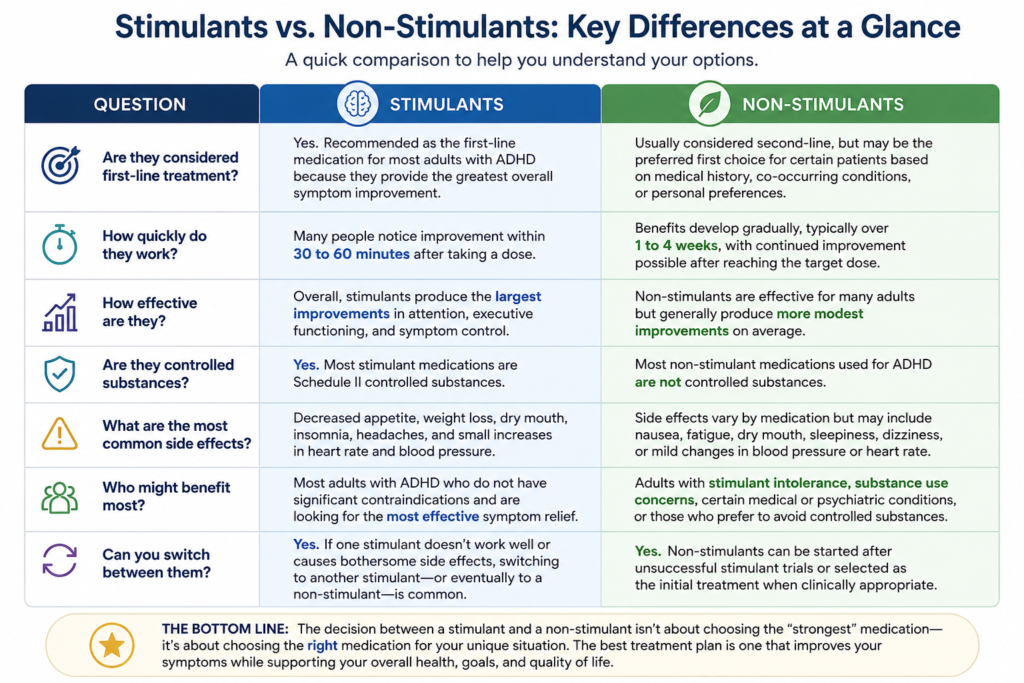
Key Takeaways: Stimulants vs. Non-Stimulants at a Glance
If you’ve read this far, you probably realize that choosing an ADHD medication is more nuanced than simply deciding between a stimulant and a non-stimulant. While every treatment plan should be individualized, the table below summarizes the major differences between these two medication classes.
The Bottom Line
The decision between a stimulant and a non-stimulant isn’t about choosing the “strongest” medication—it’s about choosing the right medication for your unique situation.
For most adults, a stimulant remains the best place to start because it offers the greatest likelihood of meaningful symptom improvement. However, non-stimulant medications are valuable, evidence-based treatments that may be the better option for individuals with certain medical conditions, co-occurring psychiatric disorders, previous medication intolerance, or personal preferences.
The most successful treatment plans are built on a partnership between you and your healthcare professional. By considering your symptoms, medical history, lifestyle, and goals, you can work together to choose a medication that not only improves attention and executive functioning but also supports your overall health and quality of life.
Final Thoughts
Deciding whether to take a stimulant or a non-stimulant medication is one of the first—and often one of the most important—decisions adults face after being diagnosed with ADHD.
Fortunately, it’s not a decision you have to make alone.
Over the past several decades, researchers have developed a strong evidence base to help guide ADHD treatment. That research consistently shows that stimulant medications remain the most effective first-line treatment for most adults, while non-stimulants provide valuable alternatives for individuals with specific medical conditions, co-occurring mental health concerns, medication intolerance, or personal preferences (Posner et al., 2020; Ostinelli et al., 2025).
At the same time, research also reminds us that there is no single medication that’s right for everyone.
Two people with nearly identical ADHD symptoms may respond very differently to the same medication. One may achieve excellent symptom control with the first prescription, while another may require adjustments in medication type, dose, or formulation before finding the right fit.
That’s not unusual—it’s simply part of providing personalized, evidence-based care.
The goal of treatment isn’t to find the “strongest” medication or the newest medication. It’s to find the medication that helps you think more clearly, stay organized, manage daily responsibilities, and improve your quality of life while minimizing side effects.
And medication is only one piece of the picture.
The best long-term outcomes often come from combining medication with healthy sleep habits, regular physical activity, effective stress management, organizational strategies, and, when appropriate, psychotherapy or ADHD coaching. Together, these approaches can help reduce symptoms while building the skills needed to succeed at work, at home, and in relationships.
If you think you may have ADHD—or if you’ve been diagnosed but are still struggling despite treatment—the next step is to speak with a qualified healthcare professional who has experience evaluating and treating adult ADHD.
A comprehensive evaluation can help determine whether ADHD is contributing to your symptoms, identify any co-occurring conditions that may influence treatment, and develop a personalized plan based on your unique goals, medical history, and lifestyle.
Living with untreated ADHD can affect nearly every area of life, from your career and finances to your relationships and self-confidence. The good news is that effective treatments are available, and for many adults, the right treatment can be genuinely life-changing.
You don’t have to settle for constantly feeling overwhelmed, distracted, or exhausted from trying to keep up.
With an accurate diagnosis, an individualized treatment plan, and ongoing support, it’s possible to better manage ADHD symptoms—and create a life that’s more productive, balanced, and fulfilling.
References
Barbuti, M., Maiello, M., Spera, V., et al. (2023). Challenges of treating ADHD with comorbid substance use disorder: Considerations for the clinician. Journal of Clinical Medicine, 12(9), 3096. https://doi.org/10.3390/jcm12093096
Brancati, G. E., Magnesa, A., Acierno, D., et al. (2024). Current nonstimulant medications for adults with attention-deficit/hyperactivity disorder. Expert Review of Neurotherapeutics, 24(8), 743–759. https://doi.org/10.1080/14737175.2024.2370346
Cortese, S. (2020). Pharmacologic treatment of attention deficit–hyperactivity disorder. The New England Journal of Medicine, 383(11), 1050–1056. https://doi.org/10.1056/NEJMra1917069
Cortese, S., Adamo, N., Del Giovane, C., et al. (2018). Comparative efficacy and tolerability of medications for attention-deficit hyperactivity disorder in children, adolescents, and adults: A systematic review and network meta-analysis. The Lancet Psychiatry, 5(9), 727–738. https://doi.org/10.1016/S2215-0366(18)30269-4
Holt, A., Strange, J. E., Rasmussen, P. V., et al. (2024). Long-term cardiovascular risk associated with treatment of attention-deficit/hyperactivity disorder in adults. Journal of the American College of Cardiology, 83(19), 1870–1882. https://doi.org/10.1016/j.jacc.2024.03.375
Olagunju, A. E., & Ghoddusi, F. (2024). Attention-deficit/hyperactivity disorder in adults. American Family Physician, 110(2), 157–166.
Ostinelli, E. G., Schulze, M., Zangani, C., et al. (2025). Comparative efficacy and acceptability of pharmacological, psychological, and neurostimulatory interventions for ADHD in adults: A systematic review and component network meta-analysis. The Lancet Psychiatry, 12(1), 32–43. https://doi.org/10.1016/S2215-0366(24)00360-2
Posner, J., Polanczyk, G. V., & Sonuga-Barke, E. (2020). Attention-deficit hyperactivity disorder. The Lancet, 395(10222), 450–462. https://doi.org/10.1016/S0140-6736(19)33004-1
Radonjić, N. V., Bellato, A., Khoury, N. M., Cortese, S., & Faraone, S. V. (2023). Nonstimulant medications for attention-deficit/hyperactivity disorder (ADHD) in adults: Systematic review and meta-analysis. CNS Drugs, 37(5), 381–397. https://doi.org/10.1007/s40263-023-01005-8
Volkow, N. D., & Swanson, J. M. (2013). Adult attention deficit–hyperactivity disorder. The New England Journal of Medicine, 369(20), 1935–1944. https://doi.org/10.1056/NEJMcp1212625
Zhang, L., Li, L., Andell, P., et al. (2024). Attention-deficit/hyperactivity disorder medications and long-term risk of cardiovascular diseases. JAMA Psychiatry, 81(2), 178–187. https://doi.org/10.1001/jamapsychiatry.2023.4294
Medical Review & Author Information
Written and medically reviewed by Troy Don, DC, AGACNP-BC, PMHNP-BC
For additional information about clinical education, professional credentials, and background, see0 Clinical Credentials & Professional Background.
Last medically reviewed: June 2026
Evidence reviewed through: June 2026
Medical Disclaimer
The information provided in this article is for educational and informational purposes only and is not intended to replace professional medical advice, diagnosis, or treatment. Reading this article does not establish a healthcare provider–patient relationship with Troy Don, AdultADHDCalifornia.com, or Peace & Prosperity Psychiatry, APNC.
ADHD symptoms and treatment recommendations vary from person to person. Decisions regarding diagnosis, medication, and other treatment options should always be made in consultation with a qualified healthcare professional who is familiar with your individual medical history and circumstances.
Continue Learning About Adult ADHD
- Adult ADHD in California: Diagnosis, Treatment, and What to Expect
- Adult ADHD Diagnosis in California: What to Expect
- What If ADHD Medication Doesn’t Work?
- ADHD in High-Achieving Women: Why Successful Women Are Often Diagnosed Later in Life
- ADHD vs. Anxiety: How to Tell the Difference
- Burnout or ADHD? Why High Performers Get It Wrong
- Adult ADHD Test: 6-Question Self-Screening Tool