
Table of Contents
ToggleUnderstanding Emotional Dysregulation, Why Emotions Feel So Intense, and What Current Research Reveals
What You’ll Learn
By the end of this guide, you’ll understand:
- What emotional regulation is—and how it differs from emotional dysregulation.
- Why emotional regulation can be more challenging for adults with ADHD, even though it isn’t currently included in the DSM-5-TR diagnostic criteria.
- What current research reveals about the brain networks involved in attention, executive function, and emotional recovery.
- How emotional regulation affects everyday life, including relationships, parenting, work, self-esteem, and overall well-being.
- Which treatments and practical strategies have the strongest scientific evidence for improving emotional regulation.
- Why understanding your brain can be the first step toward replacing self-criticism with self-awareness—and meaningful change.
Estimated reading time: 20–25 minutes
Note From Your Psychiatric Nurse Practitioner
Emotional regulation is one of the most important—and historically underrecognized—aspects of adult ADHD. Although it isn’t currently part of the formal diagnostic criteria, it often has a profound impact on relationships, work, parenting, self-esteem, and overall quality of life.
I believe patients deserve more than a diagnosis—they deserve an explanation.
My goal in writing this guide was to translate the best available scientific research into language that is practical, compassionate, and easy to understand without sacrificing accuracy.
Whether you’ve recently been diagnosed, have lived with ADHD for years, or are trying to better understand someone you care about, I hope this guide helps you replace confusion with understanding—and leaves you with practical, evidence-based reasons for hope.
Adult ADHD and Emotional Regulation
Understanding Emotional Dysregulation, Why Emotions Feel So Intense, and What Current Research Reveals
You weren’t planning to get so frustrated.
Maybe a simple misunderstanding with your partner stayed on your mind for the rest of the day. Perhaps an unexpected change in plans left you feeling far more overwhelmed than you expected. Maybe you snapped at someone you care about over something relatively minor and almost immediately wished you could take the words back.
Or perhaps criticism from a supervisor, friend, or family member lingered in your mind for hours—or even days—long after everyone else had moved on.
If experiences like these sound familiar, you’re not alone.
For many adults with ADHD, emotions can feel immediate, intense, and surprisingly difficult to let go of.
Frustration may build quickly. Disappointment can linger. Embarrassment may replay repeatedly in your mind long after an event has ended.
Even positive emotions—such as excitement, enthusiasm, or anticipation—can sometimes become so powerful that they make it difficult to think clearly or shift your attention to something else.
For decades, experiences like these were often misunderstood.
Some people were told they were “too sensitive.” Others believed they lacked self-control or simply needed to “try harder” to stay calm. Many quietly blamed themselves for emotional reactions they never fully understood.
Modern research tells a more nuanced story.
Researchers have long recognized ADHD as a condition affecting attention, impulsivity, and executive functioning. Over the past two decades, however, growing evidence has suggested that difficulties with emotional regulation may also play an important role in the lives of many adults with ADHD. Among the earliest and most influential proponents of this perspective was Russell Barkley, who argued that emotional impulsiveness and deficits in emotional self-regulation are fundamental features of ADHD and contribute substantially to everyday impairment (Barkley & Fischer, 2010; Beheshti et al., 2020; Soler-Gutiérrez et al., 2023).
Today, researchers often use the term emotional dysregulation to describe persistent difficulties regulating emotional responses. Throughout this article, we’ll use both emotional regulation and emotional dysregulation because they describe different parts of the same process. Emotional regulation refers to our ability to manage emotions in ways that fit the situation. Emotional dysregulation describes what happens when that process becomes more difficult.
Why does this matter?
Because emotional regulation influences far more than how we feel.
It affects how we communicate with our partners, respond to our children, navigate conflict at work, recover after criticism, make decisions, and ultimately how we think about ourselves.
For some adults, emotional challenges—not difficulty paying attention—create the greatest day-to-day impairment (Ben-Dor Cohen et al., 2021; Pan et al., 2023).
That realization has changed the way many clinicians think about ADHD.
At the same time, it’s important to approach this topic with scientific humility.
Although emotional dysregulation is increasingly recognized as an important feature associated with ADHD, it is not currently included among the formal diagnostic criteria for ADHD in the Diagnostic and Statistical Manual of Mental Disorders, Fifth Edition, Text Revision (DSM-5-TR).
Although Barkley and others have argued that emotional dysregulation represents a core feature of ADHD, current diagnostic criteria have not yet incorporated this perspective, and researchers continue to investigate its role within the disorder (Barkley & Fischer, 2010; Christiansen et al., 2019; Soler-Gutiérrez et al., 2023).
That distinction matters.
Good medicine requires acknowledging not only what we know, but also what we are still learning.
Regardless of where that scientific debate ultimately leads, one fact has become increasingly difficult to ignore:
For many adults, emotional regulation plays a central role in the lived experience of ADHD.
This article explores what current research reveals about emotional regulation in adults with ADHD, why emotional dysregulation may occur, how it affects everyday life, and what evidence-based treatments can help.
Along the way, we’ll separate well-established scientific findings from emerging theories, translate complex neuroscience into everyday language, and explore how greater understanding can replace years of confusion with greater self-awareness and hope.
Before We Begin...
If you’ve spent years believing you were simply “too emotional,” “too sensitive,” or “bad at handling stress,” it’s worth considering another possibility.
What if the problem wasn’t that you felt emotions more deeply than everyone else?
What if, instead, your brain had greater difficulty regulating those emotions once they were activated?
That may sound like a small distinction.
It isn’t.
It changes the conversation entirely.
Emotional regulation is not about avoiding feelings or becoming emotionally detached.
Instead, it is the ability to experience the full range of human emotions while adjusting your response to fit the situation. It helps us pause before reacting in anger, recover after disappointment, adapt when plans unexpectedly change, and move forward after receiving criticism.
For many adults with ADHD, these regulatory processes appear to require considerably more effort.
Rather than acting as an efficient braking system, the brain networks responsible for managing emotional responses may respond more slowly or less consistently. As a result, emotions can become harder to interrupt once they begin, and returning to an emotional baseline may take longer than expected (Christiansen et al., 2019; Liu et al., 2022).
Understanding this difference is not about making excuses.
Every person remains responsible for how they respond to their emotions and how those responses affect the people around them.
But understanding the neuroscience offers something equally valuable.
An explanation.
Explanations do not eliminate responsibility.
They can eliminate unnecessary shame.
Many adults with ADHD spend years trying to solve the wrong problem.
They believe they need more discipline, stronger willpower, or greater emotional toughness when what they often need is a better understanding of how their brain regulates attention, executive function, and emotion.
This article is not intended to convince you that every emotional struggle is caused by ADHD.
Human emotions are shaped by personality, relationships, life experiences, stress, trauma, sleep, physical health, and other mental health conditions. ADHD is only one piece of a much larger picture.
Instead, our goal is to answer a question that countless adults have quietly asked themselves:
“Why do my emotions sometimes feel so much harder to manage than they seem to be for other people?”
Current research cannot answer that question with complete certainty.
But it can provide something many adults have never received before:
A scientifically grounded explanation that replaces self-blame with understanding.
Why Does ADHD Affect Emotional Regulation?
If emotional regulation feels more difficult for you than it seems to be for other people, you’re probably wondering why.
Is it simply part of your personality?
Did you never learn healthy coping skills?
Are you just more sensitive than everyone else?
These are understandable questions.
They’re also questions researchers have been trying to answer for decades.
Today, scientists believe the answer is far more complex than simply having “strong emotions.”
Instead, emotional regulation appears to depend on an intricate network of brain systems working together to help us recognize emotions, evaluate their importance, control our immediate reactions, and gradually return to an emotional baseline.
For many adults with ADHD, it’s this regulatory system—not emotion itself—that appears to function differently (Christiansen et al., 2019; Liu et al., 2022).
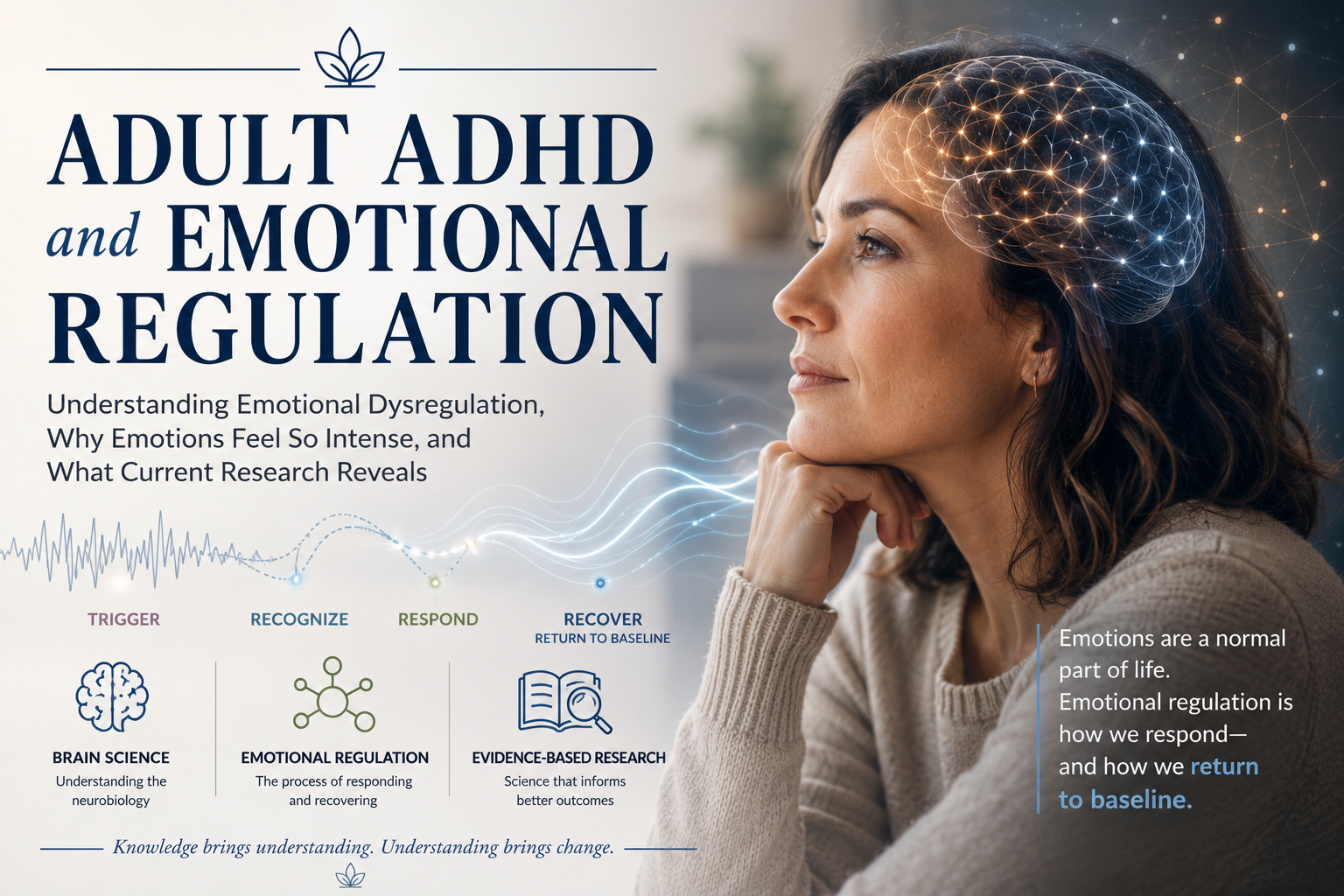
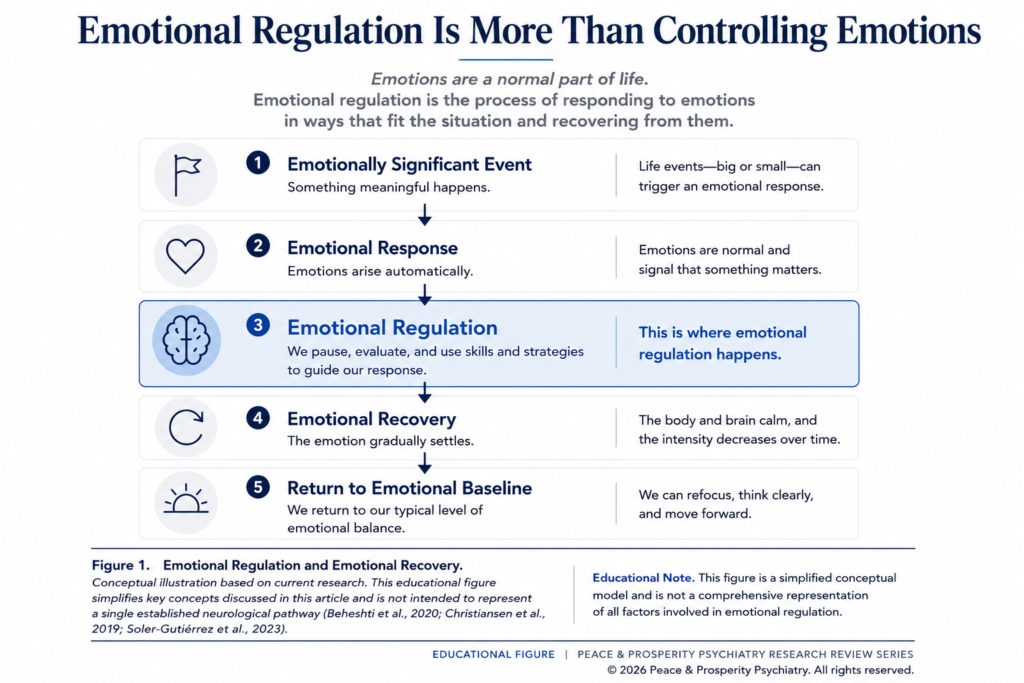
Before exploring the neuroscience in more detail, it’s helpful to step back and look at emotional regulation as a whole. Figure 1 provides a simplified conceptual overview of the process we’ll be referring to throughout the remainder of this article.
Although this educational figure is not intended to represent a single neurological pathway, it illustrates an important concept: emotional regulation is not about avoiding emotions—it includes recognizing them, responding intentionally, and gradually recovering from them. Current research suggests that many adults with ADHD experience greater difficulty with this recovery process (Beheshti et al., 2020; Christiansen et al., 2019; Soler-Gutiérrez et al., 2023).
Your Brain Doesn't Have an "Emotion Center"
When people talk about emotions, they often imagine one specific part of the brain that’s responsible for feelings.
The reality is much more interesting.
Every emotional experience involves multiple brain regions communicating with one another in fractions of a second.
Some areas detect emotionally important events.
Others decide whether those events deserve your attention.
Others help you pause before reacting.
Still others help you recover once the emotion has passed.
When communication between them becomes less efficient, emotions may become harder to regulate—not because they’re stronger, but because the systems responsible for managing them require more effort (Christiansen et al., 2019).
That’s an important distinction.
Feeling an Emotion Is Different From Regulating an Emotion
Everyone experiences frustration.
Everyone feels disappointed.
Everyone becomes embarrassed.
The difference isn’t whether emotions occur.
The difference is what happens next.
Imagine two people receiving the same piece of constructive criticism at work.
Both feel disappointed.
Both experience the same initial emotional reaction.
One person reflects on the feedback, adjusts, and gradually moves on.
The other spends the rest of the day replaying the conversation, questioning what was said, imagining different responses, and feeling the emotional sting every time the memory returns.
The emotion itself may have started at a similar intensity.
The difference lies in how efficiently the brain regulates, redirects, and eventually recovers from that emotional experience.
Current research suggests this may be one of the defining challenges for many adults with ADHD (Beheshti et al., 2020).
Think of Emotional Regulation Like Driving a Car
Imagine driving down a winding mountain road.
The engine gives you power.
The steering wheel helps you stay on course.
The brakes allow you to slow down when conditions change unexpectedly.
None of these systems works alone.
You need all of them.
Emotions work much the same way.
Your emotional response provides the energy.
Executive functions help steer your attention.
Inhibitory control acts like the brakes, allowing you to pause before reacting impulsively.
Working memory helps you keep the bigger picture in mind instead of focusing only on the immediate emotion.
When these systems work together, emotional regulation feels relatively effortless.
When they don’t, the drive becomes much more difficult.
Researchers increasingly believe ADHD affects several of these regulatory systems at the same time, making emotional regulation more demanding than most people realize (Christiansen et al., 2019; Guo et al., 2021).
Meet Your Brain's Emotional Control Network
Rather than relying on one “emotion center,” emotional regulation depends on communication between several important brain regions.
Each contributes something different.
Together, they help determine not only what you feel, but how you respond to what you feel.
The Prefrontal Cortex: Your Brain’s Executive Coach
Located just behind your forehead, the prefrontal cortex helps you plan, organize, shift attention, inhibit impulses, and think through consequences before acting.
During emotionally charged situations, this region helps you pause long enough to ask questions such as:
“Is this worth reacting to?”
“Am I interpreting this correctly?”
“Will this still matter tomorrow?”
Research consistently demonstrates differences in prefrontal networks among adults with ADHD, helping explain why emotional reactions may become harder to regulate under stress (Guo et al., 2021).
The Amygdala: Your Brain’s Smoke Detector
If the prefrontal cortex is the executive coach, the amygdala functions more like a smoke detector.
Its job is to identify events that might be emotionally important.
A critical email.
A disappointed facial expression.
An unexpected change in plans.
A perceived rejection.
The amygdala rapidly signals:
“Pay attention—this matters.”
Normally, the prefrontal cortex helps determine whether that alarm should stay loud or gradually quiet down.
Researchers believe communication between these regions may be less efficient in ADHD, making it more difficult to dial down emotional reactions once they’ve started (Liu et al., 2022).
Dopamine and Norepinephrine: More Than Attention Chemicals
Most people recognize dopamine as the brain’s “reward chemical.”
In reality, dopamine and norepinephrine influence far more than pleasure.
They help regulate attention, motivation, learning, decision-making, executive functioning, and emotional control.
Differences in these neurotransmitter systems are a hallmark of ADHD and may partly explain why regulating emotional responses can become so challenging (Volkow et al., 2007).
Why Do Emotions Sometimes Last So Long?
This may be one of the most misunderstood aspects of ADHD.
Many adults don’t necessarily describe feeling emotions more intensely.
Instead, they describe having a harder time stopping those emotions once they’ve begun.
An upsetting conversation keeps replaying.
A mistake made earlier in the day remains at the forefront of your thoughts.
A brief moment of embarrassment continues to feel emotionally “alive” hours later.
Researchers believe executive function and working memory may help explain why.
When attention repeatedly returns to an emotionally significant event, the brain effectively reactivates the emotional experience.
It’s a bit like repeatedly pressing “play” on the same movie scene.
Each replay gives the emotion another opportunity to feel fresh.
This is sometimes referred to as emotional recovery.
Rather than asking, “How intense was the emotion?” researchers increasingly ask another question:
“How long did it take to return to baseline?”
For many adults with ADHD, the recovery process—not the initial emotional reaction—may be where the greatest challenge lies (Beheshti et al., 2020; Liu et al., 2022).
What This Means for You
If you’ve ever wondered why you can logically tell yourself to “let it go” while your emotions refuse to cooperate, current neuroscience offers a compassionate explanation.
Knowing something isn’t important and feeling that it isn’t important are not always the same process.
For many adults with ADHD, the challenge isn’t a lack of intelligence, maturity, or willpower.
It may reflect differences in how the brain regulates attention, executive function, and emotional recovery.
Understanding that difference doesn’t solve the problem overnight.
But it often replaces years of self-criticism with something much more useful:
Understanding.
How Emotional Regulation Affects Everyday Life
By now, we’ve explored what emotional regulation is and why it may be more difficult for many adults with ADHD.
Understanding the science is important.
But neuroscience only matters if it helps explain real life.
For many adults, emotional regulation doesn’t become noticeable in a doctor’s office.
It shows up in everyday moments.
A disagreement with a spouse.
An unexpected email from your boss.
A forgotten appointment.
A child refusing to listen.
A critical comment that replays in your mind long after everyone else has forgotten it.
These moments may seem unrelated.
In reality, they often share the same underlying challenge: regulating emotional responses quickly enough to keep them from taking over the moment.
Why Small Challenges Can Feel Surprisingly Big
One of the most confusing experiences for many adults with ADHD is realizing that the size of an emotional reaction doesn’t always seem to match the size of the problem.
A traffic jam.
A misplaced set of keys.
A change in dinner plans.
A short text message that sounds more abrupt than intended.
Objectively, none of these situations may be life-changing.
Yet in the moment, they can feel overwhelming.
This doesn’t necessarily mean the emotion itself is stronger.
Instead, the brain may have greater difficulty shifting attention away from the emotionally significant event, allowing frustration, disappointment, or anxiety to remain active longer than expected (Beheshti et al., 2020; Liu et al., 2022).
The challenge is often less about the trigger and more about the recovery.
Relationships Often Feel the Impact First
Emotional regulation plays an important role in every close relationship.
Partners, family members, friends, and coworkers don’t just experience what we say.
They experience how we say it.
Many adults with ADHD describe reacting quickly during emotionally charged conversations, only to regret their words moments later.
Others find themselves becoming unusually quiet after conflict, replaying conversations repeatedly while wondering whether they handled the situation differently than they intended.
Neither response reflects a lack of caring.
In many cases, it reflects the difficulty of regulating emotions while they are happening.
Research consistently shows that emotional dysregulation is associated with greater relationship difficulties, interpersonal conflict, and reduced quality of life among adults with ADHD (Ben-Dor Cohen et al., 2021; Soler-Gutiérrez et al., 2023).
Understanding this pattern doesn’t excuse hurtful behavior.
It does, however, help explain why improving emotional regulation is often just as important as improving attention.
The Hidden Cost of Emotional Exhaustion
Regulating emotions requires mental effort.
When your brain spends the day recovering from frustrations, managing disappointment, or replaying difficult interactions, that effort adds up.
Many adults describe feeling emotionally drained by the end of the day without fully understanding why.
This emotional effort may also contribute to experiences such as ADHD burnout, decision fatigue, and chronic stress, creating a cycle in which emotional regulation becomes even more difficult as mental resources become depleted.
We’ll explore these connections in greater depth in our articles on ADHD Burnout, Decision Fatigue, and Executive Function.
The Connection Between Emotional Regulation and Perfectionism
Many adults with ADHD appear to hold themselves to extraordinarily high standards.
While perfectionism has many possible causes, emotional regulation may help explain part of the picture.
If mistakes trigger emotional reactions that are unusually difficult to recover from, avoiding mistakes becomes emotionally rewarding.
Over time, this can contribute to perfectionistic thinking, procrastination, or avoiding new challenges altogether.
Rather than fearing failure itself, some adults begin fearing the emotional consequences of failure.
We’ll explore this relationship further in our Research Review on Adult ADHD and Perfectionism.
What About Rejection Sensitive Dysphoria?
Few topics generate more discussion within the ADHD community than Rejection Sensitive Dysphoria (RSD).
Many adults strongly identify with the idea that criticism, rejection, or perceived disapproval can trigger intense emotional pain.
Although this experience is widely recognized in clinical practice, it’s important to distinguish between clinical observation and established scientific evidence.
At present, emotional dysregulation is supported by a substantially larger body of research than RSD as a distinct diagnostic construct (Soler-Gutiérrez et al., 2023).
That doesn’t mean people’s experiences aren’t real.
It simply means researchers are still working to better understand whether RSD represents a unique phenomenon or one expression of broader emotional regulation difficulties.
Good science sometimes means saying, “We don’t know yet.”
That’s not a weakness.
It’s part of honest medicine.
To read more on: Rejection Sensitive Dysphoria
Can Emotional Regulation Improve?
For many readers, this may be the most important question in the entire article.
The encouraging answer is:
Yes.
Current evidence suggests that emotional regulation is not fixed.
Like attention, organization, and executive functioning, emotional regulation can improve with appropriate treatment, greater self-awareness, and intentional practice.
That doesn’t mean emotions disappear.
Nor should they.
The goal isn’t to become less emotional.
The goal is to become more flexible in how you respond to your emotions.
Research suggests that stimulant medications, atomoxetine, cognitive behavioral therapy (CBT), dialectical behavior therapy (DBT)-informed skills, mindfulness-based approaches, regular exercise, healthy sleep, and executive function coaching may all contribute to improved emotional regulation, although no single intervention works for everyone (Lenzi et al., 2018; Yang et al., 2025; López-Pinar et al., 2020).
For many adults, the greatest improvements occur when treatment addresses both the core symptoms of ADHD and the emotional challenges that accompany them.
What This Means for You
If you’ve spent years believing your emotional reactions reflected weakness, immaturity, or a personal failing, current research offers another perspective.
Many adults with ADHD experience genuine differences in how their brains regulate emotions.
That doesn’t remove responsibility for how we respond.
But it does suggest that change begins with understanding rather than self-criticism.
Self-awareness isn’t the finish line.
It’s the starting point.
Where Researchers Are Still Searching for Answers
Although our understanding of emotional regulation in ADHD has advanced tremendously over the past two decades, many important questions remain.
Researchers are still trying to determine:
- Why emotional dysregulation affects some adults more than others.
- Whether distinct emotional regulation subtypes exist within ADHD.
- How emotional regulation changes across the lifespan.
- Why women often report greater emotional dysregulation than men.
- Which treatments work best for specific emotional profiles.
- Whether emotional dysregulation should eventually become part of formal ADHD diagnostic models.
Those unanswered questions aren’t frustrating.
They’re exciting.
They remind us that our understanding of ADHD continues to evolve—and that future research will likely lead to even better treatments and greater insight.
Learning to Regulate Emotions: What Current Research Says About Treatment
After learning about emotional regulation in ADHD, many adults ask the same question:
“Can this actually get better?”
The encouraging answer is yes.
Not because emotional regulation suddenly becomes effortless.
Not because treatment makes difficult emotions disappear.
But because decades of research—and the experiences of countless adults living with ADHD—suggest that emotional regulation can improve with the right combination of treatment, self-awareness, and practice.
That improvement often happens gradually.
For many people, the first noticeable change isn’t that emotions become less intense.
Instead, they begin recovering more quickly.
They pause before reacting.
They recognize emotional triggers sooner.
They find it easier to shift their attention away from frustrating situations.
In other words, their emotional recovery becomes more efficient.
That’s an important distinction because the goal of treatment isn’t to eliminate emotion.
The goal is to improve emotional regulation.
Why Treatment Looks Different for Everyone
One reason emotional regulation can feel frustrating is that there is no single cause.
As we’ve discussed throughout this article, emotional regulation depends on multiple brain systems working together. Attention, executive functioning, inhibitory control, working memory, stress, sleep, relationships, and life experiences all influence how we respond to emotionally significant situations.
That means treatment rarely involves just one intervention.
For some adults, medication produces a dramatic improvement.
For others, medication provides a helpful foundation, but meaningful progress doesn’t occur until it’s combined with psychotherapy, lifestyle changes, and executive function strategies.
Rather than asking, “Which treatment works best?”, a more helpful question is:
“Which combination of treatments is most likely to help me?”
Current research increasingly supports this multimodal approach (Gonda et al., 2026).
Medication: Improving the Brain's Ability to Regulate
For many adults with ADHD, medication is one of the first treatments discussed after diagnosis.
Most people think of ADHD medications as improving attention and reducing distractibility.
They certainly can.
But growing evidence suggests they may also improve emotional regulation for many adults.
How?
To understand why, it’s helpful to remember that the same brain systems involved in attention also play an important role in regulating emotions.
The prefrontal cortex—the region responsible for planning, inhibition, and executive functioning—relies heavily on dopamine and norepinephrine to function efficiently.
Those same neurotransmitters also help regulate emotional responses.
When these systems function more effectively, many adults notice they become better able to pause before reacting, tolerate frustration, and recover after emotionally upsetting events.
Importantly, medication doesn’t suppress emotions.
Instead, it may improve the brain’s ability to regulate them.
Current evidence supports this idea.
A systematic review and meta-analysis of 21 randomized controlled trials found that standard ADHD medications produced small-to-moderate improvements in emotional dysregulation in adults. Among the medications studied, lisdexamfetamine showed the largest effect, followed by methylphenidate and atomoxetine (Lenzi et al., 2018).
That finding is encouraging.
It also comes with an important caveat.
Researchers consistently find that medication tends to improve emotional regulation less than it improves core ADHD symptoms such as attention and impulsivity (Lenzi et al., 2018).
Why is that?
Researchers don’t yet know for certain.
One possibility is that medication primarily improves the executive control systems responsible for regulating emotions, while the emotional response itself is influenced by many additional factors, including life experiences, personality, stress, relationships, and learned coping strategies.
In other words, medication often creates better conditions for emotional regulation.
It doesn’t automatically teach emotional regulation skills.
That is one reason many clinicians recommend combining medication with psychotherapy or skills-based interventions.
What This Means for You
If medication improves your ability to pause before reacting—but you still find yourself becoming overwhelmed during emotionally stressful situations—you are not failing treatment.
You’re experiencing something researchers commonly observe.
Medication often opens the door.
Learning new ways to respond emotionally is what helps many adults walk through it.
Why Therapy Can Be So Effective
Many people think therapy is primarily about talking through difficult experiences.
While that can certainly be valuable, modern psychotherapy for ADHD often focuses on something much more practical:
Learning new ways to respond when emotions become activated.
Several forms of psychotherapy have been studied in adults with ADHD.
Among them, Cognitive Behavioral Therapy (CBT) has the strongest evidence base.
CBT doesn’t attempt to eliminate emotions.
Instead, it helps people recognize the patterns that often make emotions harder to regulate.
For example, a frustrating mistake at work might quickly become:
“I’m terrible at this.”
Which becomes:
“I’m going to fail.”
Which becomes:
“Why do I always do this?”
Each thought intensifies the emotional experience.
CBT teaches people to notice these patterns before they gain momentum.
Over time, this can shorten emotional recovery and reduce the intensity of future reactions.
Large systematic reviews have found that CBT improves ADHD symptoms, emotional regulation, anxiety, depression, and quality of life, with benefits that often persist well beyond the end of treatment (Yang et al., 2025).
DBT: Learning to Stay Steady During Emotional Storms
Dialectical Behavior Therapy (DBT) was originally developed for individuals with severe emotional dysregulation.
Although it wasn’t designed specifically for ADHD, many of its core skills align remarkably well with the challenges we’ve discussed throughout this article.
DBT teaches practical strategies such as:
- recognizing emotions before they become overwhelming
- tolerating distress without acting impulsively
- identifying emotional triggers
- practicing mindfulness during emotionally charged situations
- choosing intentional responses instead of automatic reactions
Perhaps the greatest strength of DBT is that it assumes emotions are real and valid while also teaching that our responses remain within our control.
That balance resonates with many adults who have spent years feeling judged for emotional reactions they struggled to regulate.
Current evidence suggests DBT can improve emotional regulation and quality of life for adults with ADHD, particularly when emotional dysregulation is a prominent concern (López-Pinar et al., 2020).
Why Mindfulness Isn't About "Clearing Your Mind"
Few interventions are more misunderstood than mindfulness.
Many people imagine sitting quietly, emptying their thoughts, and feeling completely calm.
That isn’t mindfulness.
Mindfulness is simply the practice of noticing what’s happening in the present moment without immediately reacting to it.
For adults with ADHD, that pause can be remarkably powerful.
Remember our discussion of emotional recovery?
Mindfulness creates opportunities for the brain to interrupt automatic emotional reactions before they gain momentum.
Instead of immediately reacting, you begin noticing:
“I’m becoming frustrated.”
That moment of awareness often becomes the first step toward choosing a different response.
Research suggests mindfulness-based approaches can improve attention, emotional regulation, and overall well-being for many adults with ADHD, particularly when incorporated into broader treatment plans (Yang et al., 2025).
What This Means for You
One of the most hopeful findings in modern ADHD research is that emotional regulation appears to be modifiable.
Whether through medication, psychotherapy, mindfulness, or a combination of approaches, many adults learn to respond to emotions differently over time.
That doesn’t mean emotions disappear.
It means they become easier to understand, easier to navigate, and less likely to control your decisions.
Building a Life with Better Emotional Regulation
By now, you may be recognizing parts of your own story throughout this article.
Perhaps you’ve realized that emotions often linger longer than you expected.
Maybe you’ve begun to understand why criticism can feel so difficult to let go of.
Or perhaps you’ve discovered that what you’ve spent years calling “overreacting” may actually reflect something much more complex.
If so, there’s an important message worth remembering:
Understanding emotional regulation is only the beginning.
The goal isn’t simply to explain why emotional challenges occur.
The goal is to learn how to respond differently over time.
Fortunately, emotional regulation is not determined by one single factor.
Everyday habits can influence how effectively the brain regulates emotions, often in ways that are easy to underestimate.
Why Sleep Matters More Than Most People Realize
Nearly everyone has experienced becoming more irritable after a poor night’s sleep.
For adults with ADHD, the effects may be even more noticeable.
Sleep plays a critical role in executive functioning, attention, emotional regulation, and stress recovery. When sleep is disrupted, the prefrontal cortex—the region responsible for planning, inhibition, and self-regulation—becomes less efficient.
At the same time, emotionally reactive brain regions may become more active.
The result?
Small frustrations become harder to manage.
Patience becomes more difficult.
Recovering from emotionally upsetting events often takes longer.
Improving sleep will not eliminate emotional dysregulation.
But it often makes every other treatment work more effectively because the brain has greater capacity to regulate itself.
Movement Helps the Brain Regulate Itself
Exercise is often recommended for ADHD.
Sometimes that advice can feel overly simplistic.
The reason exercise helps goes far beyond “burning off energy.”
Regular physical activity influences dopamine, norepinephrine, stress hormones, sleep quality, and executive functioning—all of which contribute to emotional regulation.
Many adults notice that after a brisk walk, bike ride, strength training session, or other enjoyable activity, they recover more quickly from emotionally stressful situations.
Exercise doesn’t erase difficult emotions.
It often makes the brain more flexible in responding to them.
Stress Makes Emotional Regulation Harder
Stress affects everyone.
But chronic stress places additional demands on the same executive function systems that adults with ADHD already rely on heavily.
When stress increases, emotional regulation often becomes more difficult.
Small frustrations may feel larger.
Patience becomes shorter.
Recovery takes longer.
This is one reason emotional regulation often fluctuates.
You may feel remarkably steady during one season of life and struggle during another.
That doesn’t necessarily mean your ADHD has become worse.
Sometimes it means your brain is working with fewer available resources.
Recognizing that pattern allows you to respond with curiosity instead of self-criticism.
The Power of Self-Compassion
Perhaps the most overlooked treatment for emotional regulation isn’t a medication or a therapy technique.
It’s the way we speak to ourselves.
Many adults with ADHD carry years—even decades—of self-criticism.
“I should know better.”
“Why can’t I just get over this?”
“Everyone else seems to handle this.”
Over time, these thoughts become automatic.
Ironically, self-criticism often makes emotional regulation more difficult.
When every emotional struggle is interpreted as a personal failure, the emotional response becomes even stronger.
Self-compassion offers a different approach.
It isn’t about lowering expectations or avoiding responsibility.
It’s about responding to yourself with the same honesty, patience, and understanding you would likely offer someone you care about.
Research in psychology consistently suggests that self-compassion is associated with greater emotional resilience, healthier coping strategies, and improved psychological well-being.
For adults with ADHD, understanding the neuroscience behind emotional regulation often becomes the first step toward developing that compassion.
Understanding reduces shame.
And reducing shame creates space for growth.
What Researchers Still Don't Know
Although our understanding of emotional regulation in ADHD has grown tremendously over the past two decades, many important questions remain.
Researchers are still working to determine whether emotional dysregulation should eventually become part of the formal diagnostic criteria for ADHD or remain an associated feature that affects many—but not all—adults.
Scientists are also exploring why emotional regulation varies so widely from one person to another.
Why do some adults experience only mild emotional challenges while others find emotional regulation to be one of the most impairing aspects of ADHD?
Researchers are beginning to identify distinct emotional regulation profiles, but this work is still in its early stages and requires further study (Yue et al., 2026).
Many questions also remain about treatment.
Which therapies work best for different emotional regulation profiles?
How should treatment differ for women, who often report greater emotional dysregulation than men?
Can emotional regulation improve enough to change long-term outcomes such as relationship satisfaction, occupational success, or overall quality of life?
These questions do not reflect weaknesses in the science.
They reflect a field that continues to evolve.
One of the most encouraging developments in ADHD research is that emotional regulation has moved from being a largely overlooked topic to one of the most active areas of investigation.
That gives researchers—and patients—good reason for optimism.
Frequently Asked Questions
Is emotional dysregulation an official symptom of ADHD?
Not currently. Emotional dysregulation is not included in the DSM-5-TR diagnostic criteria for ADHD. However, a growing body of research and clinical experience suggests it is a common and clinically important feature for many adults with ADHD (Beheshti et al., 2020; Soler-Gutiérrez et al., 2023).
Can ADHD make emotions feel more intense?
For many adults, yes. Current research suggests the greater challenge often lies in regulating and recovering from emotions rather than simply feeling stronger emotions. Emotional experiences may last longer or become harder to disengage from once they begin.
Why do I stay upset for so long?
Researchers believe this may reflect the interaction between attention, working memory, and executive functioning. Emotionally significant events may continue to capture attention, repeatedly reactivating the emotional experience instead of allowing it to gradually settle.
Is emotional dysregulation the same as anxiety or depression?
No. Anxiety and depression can certainly affect emotional regulation, but they are separate conditions. Emotional dysregulation may occur alongside ADHD, anxiety, depression, or other mental health disorders, which is why a comprehensive evaluation is important.
Is emotional dysregulation the same as bipolar disorder?
No. Bipolar disorder involves distinct episodes of elevated or depressed mood that persist over days to weeks. Emotional dysregulation in ADHD is more often characterized by rapid emotional reactions and difficulty returning to baseline after emotionally significant events.
Can ADHD medication improve emotional regulation?
Yes, for many adults. Research suggests stimulant medications and atomoxetine can improve emotional regulation, although the effects are generally smaller than those seen for core ADHD symptoms (Lenzi et al., 2018). Many people benefit most from combining medication with psychotherapy and practical skills training.
Can emotional regulation improve without medication?
Yes. Cognitive Behavioral Therapy (CBT), DBT-informed skills, mindfulness, executive function strategies, regular exercise, healthy sleep, and stress management all have evidence supporting their role in improving emotional regulation. The most effective treatment plan depends on the individual and should be tailored to their needs.
Will I always struggle with emotional regulation?
Not necessarily. Emotional regulation is a skill influenced by brain function, experience, treatment, and practice. Many adults notice meaningful improvements over time, particularly when ADHD is recognized and treated comprehensively.
Key Takeaways
- Emotional regulation is an essential part of everyday life. It influences how we respond to frustration, recover from disappointment, navigate relationships, make decisions, and ultimately how we think about ourselves.
- Emotional dysregulation has been proposed by leading ADHD researchers as a fundamental feature of the disorder and is increasingly recognized as one of the most important—but historically underrecognized—aspects of adult ADHD. Although it is not currently included in the DSM-5-TR diagnostic criteria, a growing body of research supports its clinical importance (Barkley & Fischer, 2010; Beheshti et al., 2020; Soler-Gutiérrez et al., 2023).
- For many adults, the greatest challenge is not feeling emotions—it is regulating them and recovering from them. Returning to emotional baseline is an important part of emotional regulation and may be one of the defining challenges for many adults with ADHD (Beheshti et al., 2020; Liu et al., 2022).
- Executive function, attention, inhibitory control, working memory, and emotional regulation are deeply interconnected. Understanding one helps explain the others and provides a more complete picture of how ADHD affects everyday life.
- Emotional regulation influences nearly every area of life, including relationships, parenting, work performance, self-esteem, perfectionism, burnout, and overall quality of life.
- Treatment can help. Current research suggests that medication, psychotherapy, healthy routines, and practical emotional regulation skills can all contribute to meaningful improvement for many adults with ADHD (Lenzi et al., 2018; López-Pinar et al., 2020; Yang et al., 2025).
- Current research continues to evolve. Scientists are still working to better understand why emotional dysregulation affects some adults more than others, how it changes across the lifespan, and which treatments work best for different individuals.
- Understanding emotional regulation does not remove responsibility—it provides an explanation. Understanding the neuroscience behind ADHD can replace years of unnecessary self-blame with greater self-awareness, compassion, and evidence-based strategies that support lasting change.
Conclusion
For much of ADHD’s history, emotional struggles were often viewed as secondary concerns—or overlooked entirely.
Today, the picture looks very different.
A growing body of research suggests that emotional regulation plays a fundamental role in the lives of many adults with ADHD. Although researchers continue to debate exactly how emotional dysregulation fits within the disorder, there is increasing agreement that it can profoundly influence relationships, work, parenting, self-confidence, and overall quality of life.
That shift in understanding matters.
For years, many adults interpreted intense emotional reactions as evidence that they were simply “too sensitive,” lacked self-control, or needed to try harder.
Current research offers a more compassionate—and more scientifically grounded—perspective.
Difficulties with emotional regulation are not a reflection of intelligence, character, or motivation. They may reflect differences in the way the ADHD brain regulates attention, executive functioning, and emotional recovery.
Perhaps the most hopeful message is this:
Emotional regulation can improve.
Not overnight.
Not perfectly.
But meaningfully.
With appropriate treatment, practical skills, healthier routines, greater self-awareness, and self-compassion, many adults find that emotions become easier to understand, easier to navigate, and less likely to define their daily lives.
The goal is not to become someone who never feels deeply.
The goal is to become someone who understands those emotions, responds to them intentionally, and recovers from them with greater confidence.
And for many adults with ADHD, that journey begins with replacing years of self-blame with something far more powerful:
Understanding.
Continue Your ADHD Learning Journey
Understanding emotional regulation is just one part of understanding adult ADHD. If you found this guide helpful, these evidence-based resources can help you continue building your understanding of ADHD, its treatment, and the skills that support lasting improvement.
Start with These Flagship Guides
These comprehensive resources provide a broader understanding of adult ADHD, the evaluation process, and evidence-based treatment.
- The Complete Guide to Adult ADHD: Diagnosis, Treatment, and What to Expect
- Adult ADHD Treatment: The Complete Evidence-Based Guide
High-Functioning ADHD in Adults: Why Success Doesn’t Rule Out ADHD
Explore Related Topics
Emotional regulation is closely connected to many other aspects of adult ADHD. These articles explore several of the most important related topics in greater depth.
References
Barkley, R. A., & Fischer, M. (2010). The unique contribution of emotional impulsiveness to impairment in major life activities in hyperactive children as adults. Journal of the American Academy of Child & Adolescent Psychiatry, 49(5), 503–513. https://doi.org/10.1097/00004583-201005000-00011
Beheshti, A., Chavanon, M. L., & Christiansen, H. (2020). Emotion dysregulation in adults with attention deficit hyperactivity disorder: A meta-analysis. BMC Psychiatry, 20(1), 120. https://doi.org/10.1186/s12888-020-2442-7
Ben-Dor Cohen, M., Eldar, E., Maeir, A., & Nahum, M. (2021). Emotional dysregulation and health related quality of life in young adults with ADHD: A cross sectional study. Health and Quality of Life Outcomes, 19(1), 270. https://doi.org/10.1186/s12955-021-01904-8
Christiansen, H., Hirsch, O., Albrecht, B., & Chavanon, M. L. (2019). Attention-deficit/hyperactivity disorder (ADHD) and emotion regulation over the life span. Current Psychiatry Reports, 21(3), 17. https://doi.org/10.1007/s11920-019-1003-6
Guo, X., Liu, L., Li, T., et al. (2021). Inhibition-directed multimodal imaging fusion patterns in adults with ADHD and its potential underlying “gene-brain-cognition” relationship. CNS Neuroscience & Therapeutics, 27(6), 664–673. https://doi.org/10.1111/cns.13625
Lenzi, F., Cortese, S., Harris, J., & Masi, G. (2018). Pharmacotherapy of emotional dysregulation in adults with ADHD: A systematic review and meta-analysis. Neuroscience & Biobehavioral Reviews, 84, 359–367. https://doi.org/10.1016/j.neubiorev.2017.08.010
Liu, Q., Chen, W., Preece, D. A., et al. (2022). Emotion dysregulation in adults with ADHD: The role of cognitive reappraisal and expressive suppression. Journal of Affective Disorders, 319, 267–276. https://doi.org/10.1016/j.jad.2022.09.058
López-Pinar, C., Martínez-Sanchís, S., Carbonell-Vayá, E., Sánchez-Meca, J., & Fenollar-Cortés, J. (2020). Efficacy of nonpharmacological treatments on comorbid internalizing symptoms of adults with attention-deficit/hyperactivity disorder: A meta-analytic review. Journal of Attention Disorders, 24(3), 456–478. https://doi.org/10.1177/1087054719855685
Pan, M. R., Zhang, S. Y., Chen, C. L., et al. (2023). Bidirectional associations between maladaptive cognitions and emotional symptoms, and their mediating role on the quality of life in adults with ADHD: A mediation model. Frontiers in Psychiatry, 14, 1200522. https://doi.org/10.3389/fpsyt.2023.1200522
Soler-Gutiérrez, A. M., Pérez-González, J. C., & Mayas, J. (2023). Evidence of emotion dysregulation as a core symptom of adult ADHD: A systematic review. PLOS ONE, 18(1), e0280131. https://doi.org/10.1371/journal.pone.0280131
Volkow, N. D., Wang, G. J., Newcorn, J., et al. (2007). Depressed dopamine activity in caudate and preliminary evidence of limbic involvement in adults with attention-deficit/hyperactivity disorder. Archives of General Psychiatry, 64(8), 932–940. https://doi.org/10.1001/archpsyc.64.8.932
Yang, X., Zhang, L., Yu, J., & Wang, M. (2025). Short-term and long-term effect of non-pharmacotherapy for adults with ADHD: A systematic review and network meta-analysis. Frontiers in Psychiatry, 16, 1516878. https://doi.org/10.3389/fpsyt.2025.1516878
Medical Review & Author Information
Written and medically reviewed by Troy Don, DC, AGACNP-BC, PMHNP-BC
For additional information about clinical education, professional credentials, and background, see Clinical Credentials & Professional Background.
Last medically reviewed: August 2026
Evidence reviewed through: August 2026
Medical Disclaimer
This article is for educational purposes only and is not a substitute for individualized medical advice, diagnosis, or treatment. If you have questions about ADHD, mental health symptoms, medications, or treatment options, discuss them with an appropriate healthcare professional.